There is something about the National Arts Festival that refuses to be captured in a programme note or a review. You had to be there. You had to walk the streets of Makhanda, feel the bite of the winter cold, and then step into a theatre where hundreds of strangers held their breath at the same moment.
The festival’s 52nd edition, held from 25 June to 5 July 2026, carried the theme Come Together, Create New Worlds. It could easily have been dismissed as festival marketing, but it landed as something more provocative. It invited us to consider not only the worlds artists imagine on stage, but the ones we are building beyond it.
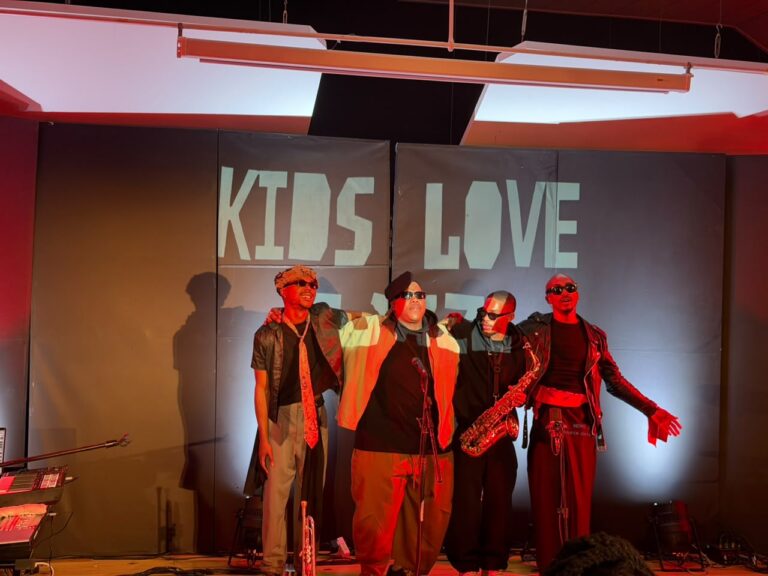
One of our first stops was Kids Love Jazz in the Beethoven Room. It was everything you would hope for from a movement that has quietly become a national phenomenon. The room was packed with young people, not the demographic many still associate with jazz, and the energy was unmistakable. This was not jazz preserved behind glass; it was jazz as a living, breathing conversation. Kids Love Jazz has cultivated a community around a genre many once dismissed as something only for older or academic audiences. Watching teenagers and twenty-somethings lean into every note, one thing became clear; jazz is not dying. It is being reclaimed.
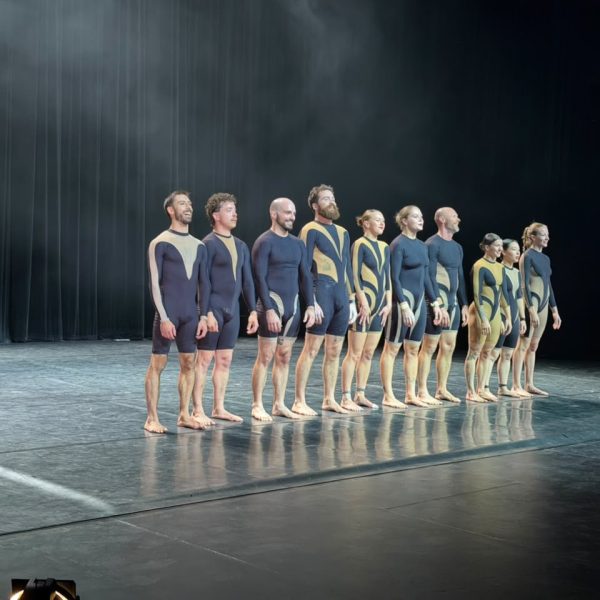
Then came WOLF by Australia’s Circa. Ten performers. Relentless physicality. A score that seemed to crawl beneath your skin. The production is often described as a gasp-inducing acrobatic thrill ride, and while that is true, it barely captures what unfolds on stage. Midway through the performance, the performers stop feeling like individuals and become something else: a pack, a current, a single breathing organism. It is circus, theatre and dance all at once, but it also feels closer to ritual. You do not simply watch WOLF. You survive it.
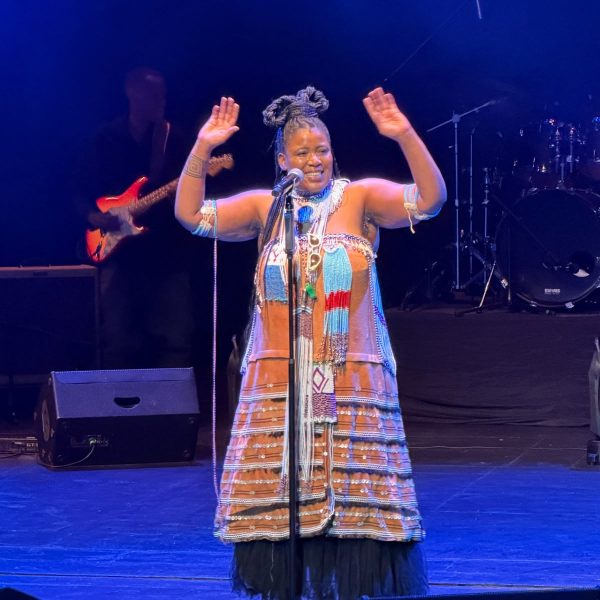
A different kind of emotional intensity arrived with Thandiswa Mazwai, whose performance at the Guy Butler Theatre on 4 July marked her first physical appearance at the festival in a decade. The Herald described it as a homecoming to her Eastern Cape roots, and the audience felt that truth long before anyone said it aloud. This was not an artist making another festival stop. It was someone returning to a place that helped shape her journey.
Mazwai recalled travelling to Makhanda by bus as a student to watch Sibongile Khumalo perform. Decades later, she stood on that same stage. It was a reminder that the National Arts Festival has long been more than a showcase. It has been a launching pad, a classroom and, for many artists, a place where careers quietly change direction.
Moments like these were only part of a much larger picture. More than 2,000 artists presented over 270 productions across the festival. Those numbers carry extra weight in a town that continues to grapple with ongoing service delivery challenges. Yet every day, audiences filled theatres, galleries and performance spaces, choosing to invest their time and attention in live art.
This year’s Standard Bank Young Artist Award winners reflected the remarkable depth of South African talent: Gabi Motuba (Jazz), Jason Jacobs (Theatre), Bronwyn Katz (Visual Art), Ndumiso Manana (Music), and Lee-ché Janecke (Dance). Each premiered new work, continuing a tradition that has marked important turning points in South African artistic careers for decades.
Across the programme, another thread emerged. Productions exploring artificial intelligence sat alongside works rooted in indigenous knowledge systems. Rather than presenting these as opposing forces, many artists explored how they might coexist, asking what Ubuntu might mean in an age increasingly shaped by algorithms and how cultural memory can remain alive amid rapid technological change.
Outside the venues, parts of Makhanda felt quieter than expected. Inside, however, audiences leaned into the work with remarkable generosity. Night after night, artists and audiences honoured an unspoken agreement: that for an hour or two, the performance mattered more than everything waiting outside. In an era increasingly shaped by automated content and algorithm-driven recommendations, that shared experience felt both rare and necessary.
This was our first National Arts Festival, but it certainly will not be our last. What stayed with us was not only the calibre of the performances, but the conversations they sparked about memory, identity, technology and the future. Those are the same questions we continue to wrestle within our own work.
We learned that jazz is not dying. We learned that circus can break your heart. We learned that a genuine homecoming can move an audience to silence.
More than five decades after it began, the National Arts Festival continues to offer something increasingly difficult to find: a space where artists and audiences gather not simply to be entertained, but to imagine what comes next. That is worth protecting.
Until the next Reflection. National Arts Festival, we’ll be back in 2027.